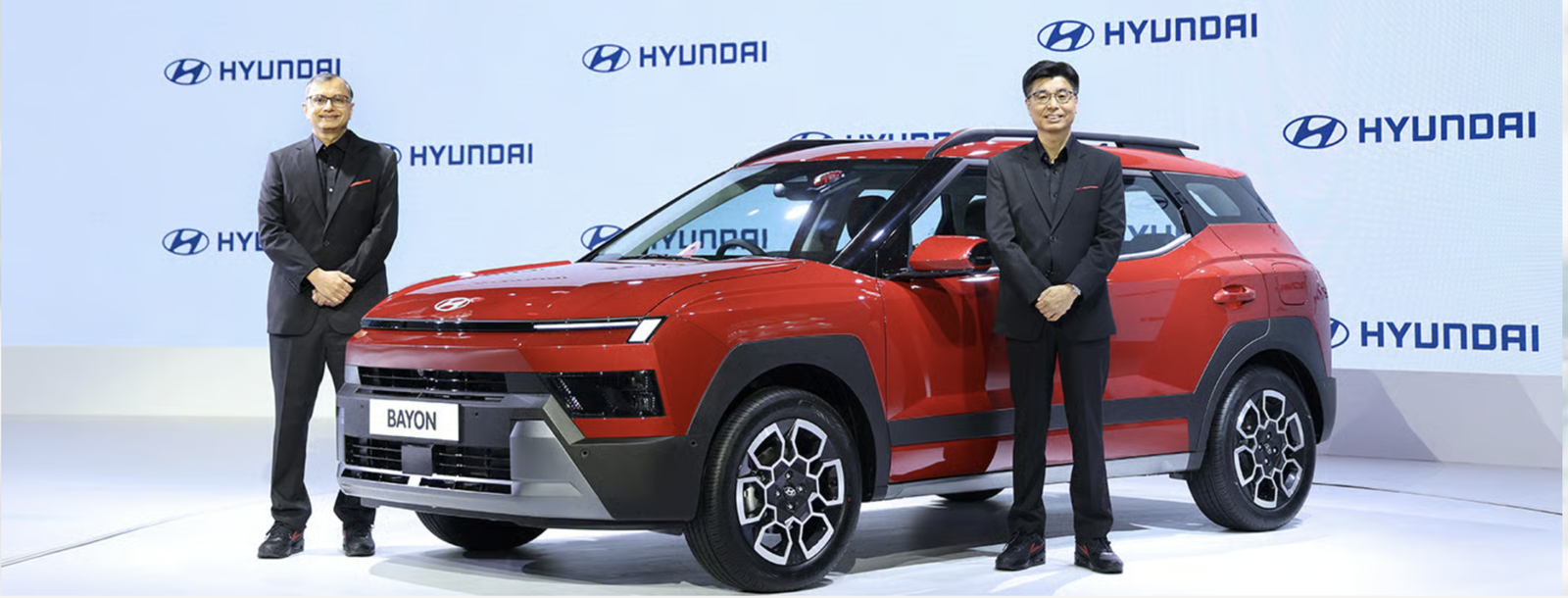

Hyundai launched the Bayon in India on 26 October 2026 at Rs 9.99 lakh (ex-showroom). Hyundai already sells the Venue below it and the Creta above it, so the first question most buyers will ask is why the company needs a third SUV in the same showroom. This piece answers that, and helps you work out whether the Bayon is your Hyundai or whether you should look one rung up or down.
Where the Bayon sits
The Bayon is a 4.2-metre crossover. It is longer than the sub-4-metre Venue and a little shorter than the Creta, and it is priced in between.
| Spec | Venue | Bayon | Creta |
|---|---|---|---|
| Length | 3,995mm | 4,245mm | 4,330mm |
| Wheelbase | 2,520mm | 2,600mm | 2,610mm |
| Engines | 1.2 petrol, 1.0 turbo-petrol, 1.5 diesel | 1.5 petrol only (CNG from Jan 2027) | 1.5 petrol, 1.5 turbo-petrol, 1.5 diesel |
| Gearboxes | Manual, DCT, torque converter | 6-speed manual, CVT | Manual, CVT, DCT, torque converter |
| Starting price | Rs 8.99 lakh | Rs 9.99 lakh | Rs 10.90 lakh |
The number that matters is the wheelbase. The Bayon’s is only 10mm shorter than the Creta’s, so rear-seat space is in Creta territory. Hyundai quotes 505 litres of boot space, more than the Creta’s 433 litres. Ground clearance is 205mm.
Where the Bayon falls short of the Creta is under the bonnet. It gets one engine: the 1.5-litre naturally aspirated petrol from the Creta and Verna, making 115hp and 144Nm. There is no turbo-petrol and no diesel. The CVT version has a claimed 18.6 kpl, and a factory CNG version is due in January 2027.
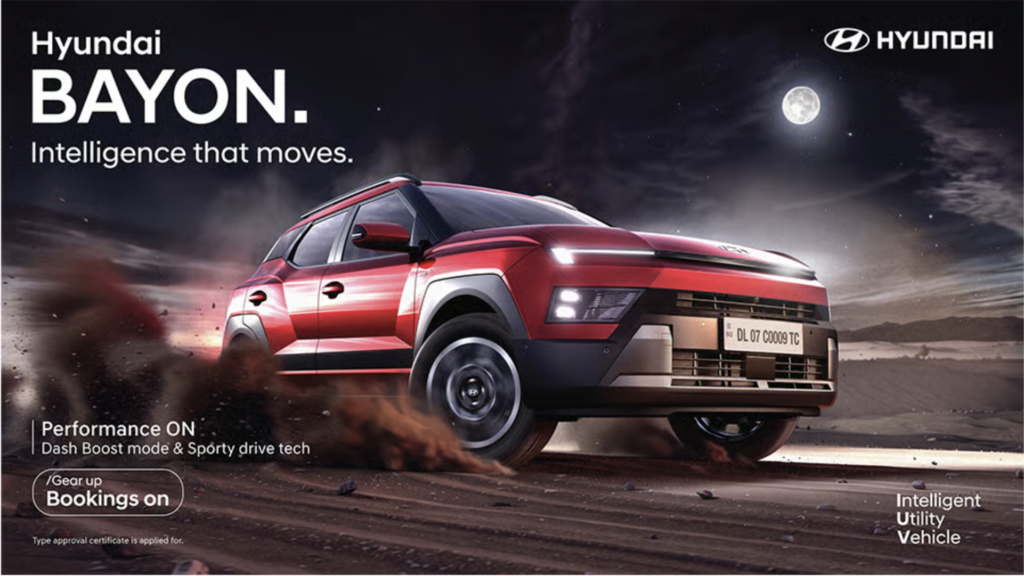
Prices run from Rs 9.99 lakh for the base HX2 manual to Rs 18 lakh for the top HX10 CVT. The CVT starts at the HX5 trim (Rs 13.85 lakh). The base Bayon is about Rs 91,000 cheaper than the base Creta and about Rs 2 lakh dearer than the Venue 1.2 petrol.
Hyundai Bayon variant-wise prices
| Variant | Gearbox | Ex-showroom price |
|---|---|---|
| HX2 | 6-speed manual | Rs 10.00 lakh |
| HX3 | 6-speed manual | Rs 10.90 lakh |
| HX3+ | 6-speed manual | Rs 11.80 lakh |
| HX5 | Manual / CVT | Rs 12.45 lakh / Rs 13.85 lakh |
| HX6 | Manual / CVT | Rs 13.57 lakh / Rs 14.97 lakh |
| HX8 | Manual / CVT | Rs 15.10 lakh / Rs 16.54 lakh |
| HX10 | Manual / CVT | Rs 16.65 lakh / Rs 18.00 lakh |
Prices are ex-showroom, India (Autocar India). The HX2 is listed at Rs 9,99,900. The HX5 is where the CVT, connected tech and over-the-air updates arrive. The HX8 adds ventilated front seats and rear disc brakes, and the HX10 adds Level 2 ADAS, the 360-degree camera and Bose audio.
Why Hyundai launched it
The mid-size SUV segment is where buyers are moving. SUVs now make up about 57% of the Indian car market, and mid-size SUVs are about 28% of SUV sales in 2026. Hyundai expects that share to reach 36% by 2032 (Daily Jagran). SUVs already account for about 70% of Hyundai’s own sales in India, and the company wants that closer to 80% (Business Today).
For years the Creta covered that whole space for Hyundai, from about Rs 11 lakh to over Rs 20 lakh. Two things have changed. Rivals now run two models in the same size class, the way Maruti sells the Victoris alongside the Grand Vitara. The next-generation Creta is also due in 2027 and is expected to move up in price. The Bayon lets Hyundai hold the entry point of the segment while the Creta moves upmarket. Hyundai is targeting 2.5 lakh combined Creta and Bayon sales in calendar year 2027 (Business Today).
The third reason is technology. Hyundai’s MD and CEO Tarun Garg has pitched the Bayon as a tech-first SUV and compared it to the way Hyundai helped make automatic gearboxes and sunroofs common in India (Daily Jagran). The car carries Hyundai’s first generative AI voice assistant, voice commands in 10 Indian and 2 international languages, over-the-air updates, 70-plus Bluelink connected features and Level 2 ADAS (Hyundai).
The Bayon is also built for export. Hyundai makes it in India and plans to ship it to more than 50 markets.
Who the Bayon is made for
The Venue owner who has run out of space. If you have a growing family or regularly drive with four or five adults and luggage, the Venue’s short wheelbase and small boot will feel tight. The Bayon gives you near-Creta space for less money.
The buyer with a Rs 12 to 16 lakh budget who wants a well-equipped car. At this price a Creta is usually a mid-spec variant. The Bayon’s upper trims bring ventilated front seats, a panoramic sunroof, 8-speaker Bose audio, a 360-degree camera, six airbags, four disc brakes and Level 2 ADAS.
The city driver who wants an easy automatic. A naturally aspirated petrol with a CVT is smooth in traffic and simple to maintain, with no turbo or dual-clutch to worry about.
The buyer who cares about connected tech. If you will actually use the voice assistant, app controls and OTA updates, the Bayon puts them front and centre.
The high-mileage buyer who can wait. If your monthly running is heavy and you are open to CNG, the factory CNG version in January 2027 will be Hyundai’s first CNG mid-size SUV in India.
Still stuck between the Bayon, Venue and Creta? Book a one-on-one consultation and get a straight answer for your budget, family and driving.
Who should look elsewhere
If you do long highway runs with a full car, the Bayon’s 115hp engine will feel adequate but not quick. The Creta turbo-petrol or diesel is the better Hyundai for you.
If you want a diesel at all, the Bayon does not offer one.
If you drive mostly alone in the city and park in tight spaces, the Venue is cheaper, easier to place and has more engine choices.
If fuel efficiency is your top priority, look at the strong hybrids in this segment: the Maruti Grand Vitara, Victoris and Toyota Hyryder.
Bayon rivals and how they differ
The Bayon’s strengths against its rivals are space, equipment and the Hyundai service network. Its weakness is the single, modest engine. Here is how the main alternatives differ:
- Maruti Victoris, Maruti Grand Vitara and Toyota Hyryder: offer a strong-hybrid option, so they win on fuel economy.
- Kia Seltos: shares the same 1.5 petrol but also offers turbo-petrol and diesel engines, so it suits buyers who want more power or a diesel.
- Honda Elevate, Skoda Kushaq, Volkswagen Taigun, Tata Sierra, Citroen Aircross and MG Astor: the other mid-size SUVs in this price band, worth a test drive if the Hyundai badge is not a must.
What to check before you book
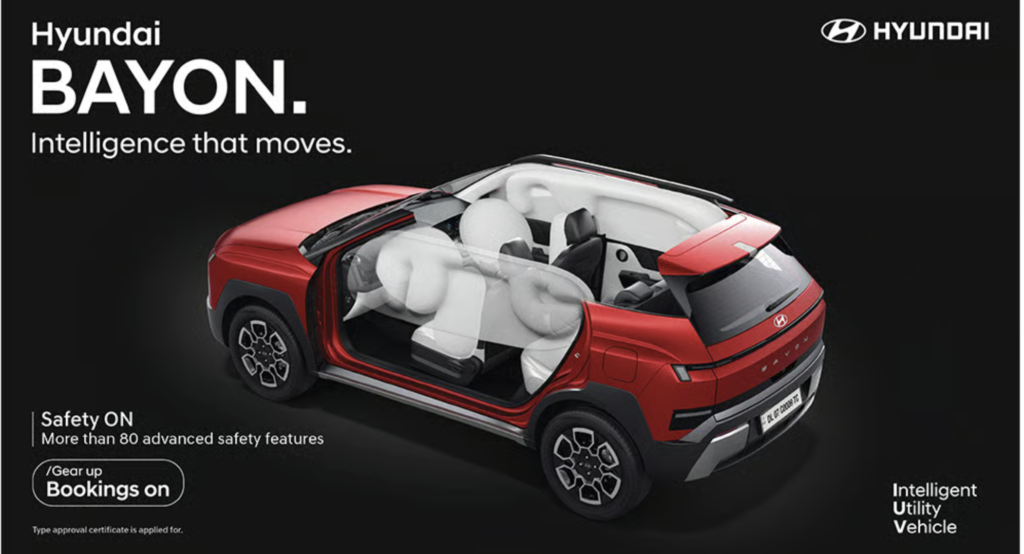
Bharat NCAP has not crash-tested the Bayon yet. Hyundai says it is built to 5-star Indian safety standards, but that is the company’s claim, not a test result. If safety ratings matter to you, wait for the Bharat NCAP score before you book.
Test-drive the CVT with the family on board. The 1.5 petrol is familiar from the Creta, but the Bayon is a different car and you should judge the performance with the load you will usually carry.
Bookings are open at Rs 11,000 through Hyundai dealers and the Hyundai website, and deliveries have started.