
A cold morning can bring on a tyre-pressure warning even when nothing has punctured the tread. Pressure changes with temperature, so a reading that looked fine in warmer weather may dip as the air cools. Before adding air, find the number the car was designed around.
Find the car’s number
Look for the tyre-information placard on the driver’s door jamb, or check the owner’s manual if it is not there. It lists the recommended pressure for the vehicle, sometimes with different settings for front and rear tyres. The number molded into a tyre’s sidewall is its maximum pressure, not a substitute for the carmaker’s recommendation.
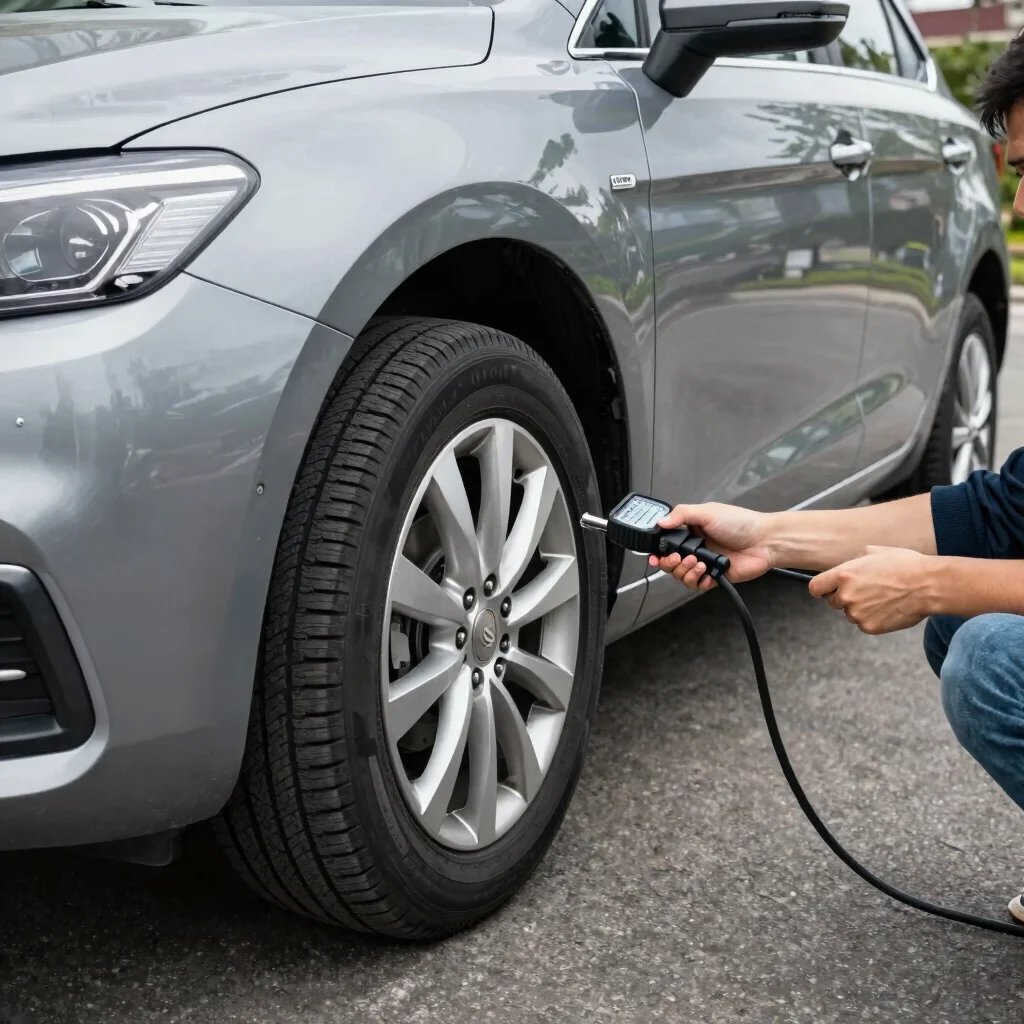
Check pressure before driving, while the tyres are still cool, and use a reliable gauge rather than judging by appearance. A tyre can look normal while it is underinflated. If you have driven far enough to warm the tyres, wait until they cool before treating the reading as a cold-pressure measurement.
Read the warning in context
A tyre-pressure monitoring system is useful, but its warning light does not tell you which tyre needs attention or how much air to add. Check all four tyres with a gauge, then inflate them to the placard’s cold-pressure setting. If the light comes back after the pressures are corrected, or one tyre keeps losing air, look for a leak or have the tyre inspected.
Make it a quick habit
Pressure checks take little time when they are part of a monthly walk-around or a routine before a long drive. Keep a gauge in the glove box, and give the tyres a look for cuts, bulges, or objects lodged in the tread. The door placard gives you the right starting point; the gauge tells you what is happening today.