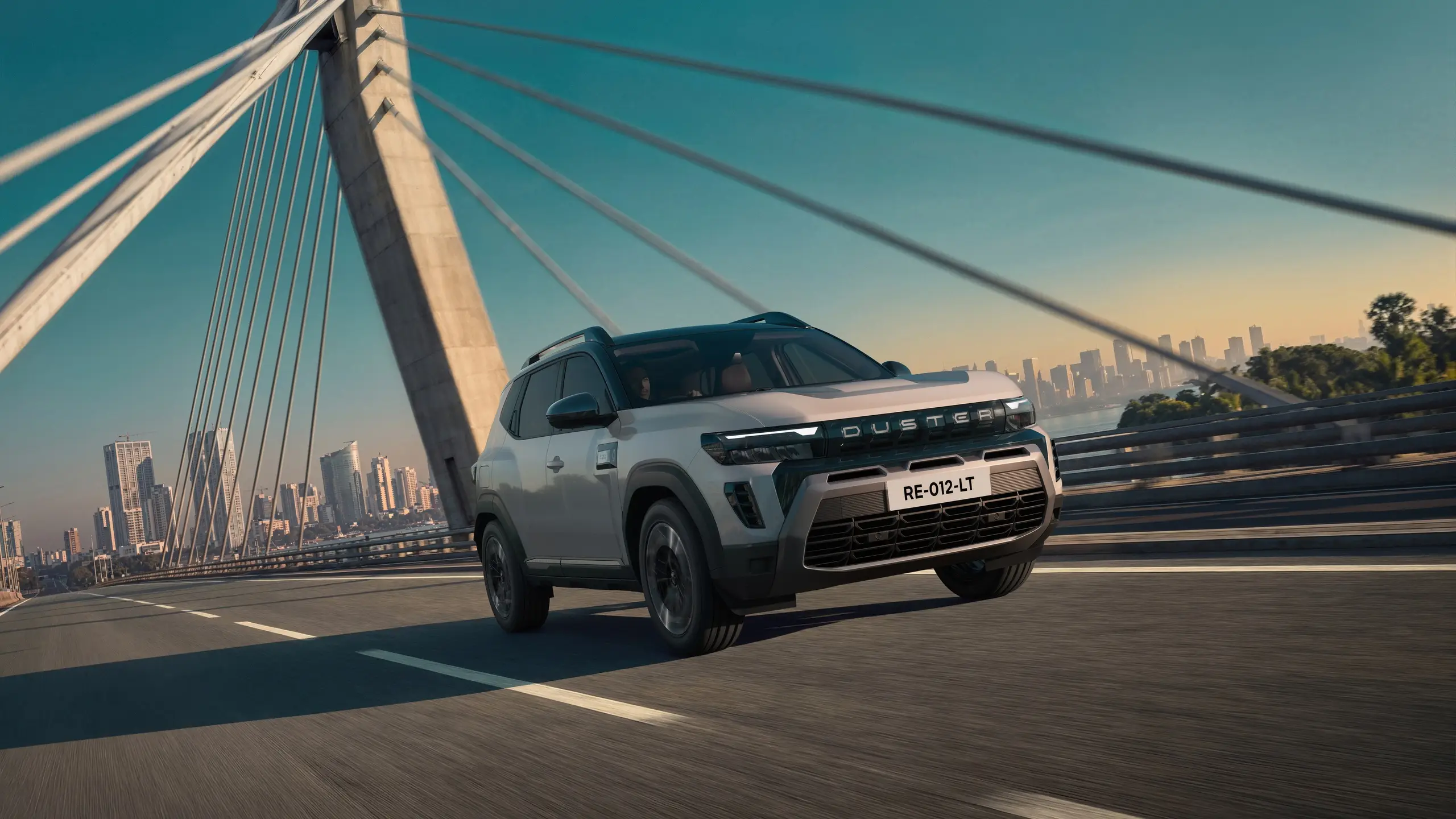

The Renault Duster Hybrid (sold as the Duster Strong Hybrid E-Tech 160) launched in India on 17 October 2026 at Rs 16.99 lakh to Rs 19.49 lakh ex-showroom. Its ARAI-certified mileage is 29 km/l, the highest of any strong-hybrid SUV on sale in In right now.
That number puts it ahead of the Maruti Victoris (28.65 km/l), the Grand Vitara and the Toyota Hyryder (both 27.97 km/l). It also comes with 160hp, about 44hp more than those three. Most buyers expect a trade-off between power and mileage. Renault claims both, and the reason sits in a hybrid layout that works differently from the Toyota-sourced system its rivals share.
This post covers how the E-Tech system works, why it can hit 29 km/l on paper, what you can expect on Indian roads, and where it falls short.
How the Duster Hybrid E-Tech 160 works
The system has four main parts. Each one has a specific job.
| Part | Spec | What it does |
|---|---|---|
| Petrol engine | 1.8-litre, 4-cylinder, naturally aspirated, Atkinson cycle, about 110hp | Drives the wheels at higher speeds and charges the battery |
| Traction motor | About 50hp, 208Nm | Drives the front wheels on its own in the city, adds boost when overtaking, and recovers energy under braking |
| Starter-generator | About 20hp | Never drives the wheels. Starts the engine, charges the battery, and spins the engine to the right speed before each gear engages |
| Battery | 1.4 kWh lithium-ion, 247V | Stores energy for electric driving. Charges itself, no plug needed |
Combined output is 160hp. That is lower than 110 + 50 + 20 because the engine and motor peak at different speeds, and the control unit blends them.
The multi-mode gearbox
This is the part that sets the Duster apart. Rivals use an e-CVT. The Duster uses a clutchless dog-clutch automatic with four gears for the engine and two for the electric motor.
There is no clutch pedal and no conventional clutch inside. The starter-generator matches the engine’s speed to the next gear so it can lock in directly. There is also no reverse gear: the electric motor simply spins backwards.
Renault says the software picks from about 15 operating modes and always chooses the one that uses the least energy. The main ones:
- EV mode: motor only, engine off. Every drive starts this way.
- Series hybrid: the engine runs the generator to charge the battery, and the motor drives the wheels.
- Parallel hybrid: engine and motor both drive the wheels, used for hard acceleration.
- Direct engine drive: the engine turns the wheels through a fixed gear, mostly at highway speeds.
In the city, the switch between electric and petrol usually happens between 40 and 60 km/h.
How the Duster Hybrid gets 29 km/l
No single part explains the number. Several design choices add up.
- A battery more than twice the size. The Duster’s 1.4 kWh pack holds over twice the energy of the 0.60 kWh pack in the Grand Vitara, Victoris and Hyryder. More stored energy means the car can stay in EV mode longer before the engine has to start. Renault claims up to 80% of city driving can happen on electric power (its own in-house test, so treat it as a best case).
- The engine stays off when it would waste fuel. Petrol engines are least efficient at low speed and light load, which describes most Indian city traffic. The Duster covers that work with the motor and shuts the engine off completely, since the starter-generator can restart it instantly.
- Atkinson-cycle engine. The 1.8-litre engine runs the Atkinson cycle, which gives up some peak power for better efficiency. The electric motor fills in the missing low-end pull.
- Fixed gears on the highway. At cruising speeds the engine can drive the wheels directly through one of its four gears, so it sits in an efficient rev range. The motor only joins in for overtakes.
- Regenerative braking. Every time you lift off or brake, the traction motor runs as a generator and sends energy back to the battery instead of losing it as brake heat. Stop-and-go traffic gives it plenty to recover.
- Software that always picks the cheapest mode. With roughly 15 modes to choose from, the control unit keeps switching to whichever uses the least energy for the speed and load at that moment.
The 29 km/l figure comes from the ARAI lab test. It shows what the car can do under fixed test conditions, which favour hybrids because they include a lot of low-speed running. Your number will be lower, as the next section explains.
Duster Hybrid vs Grand Vitara, Hyryder and Victoris
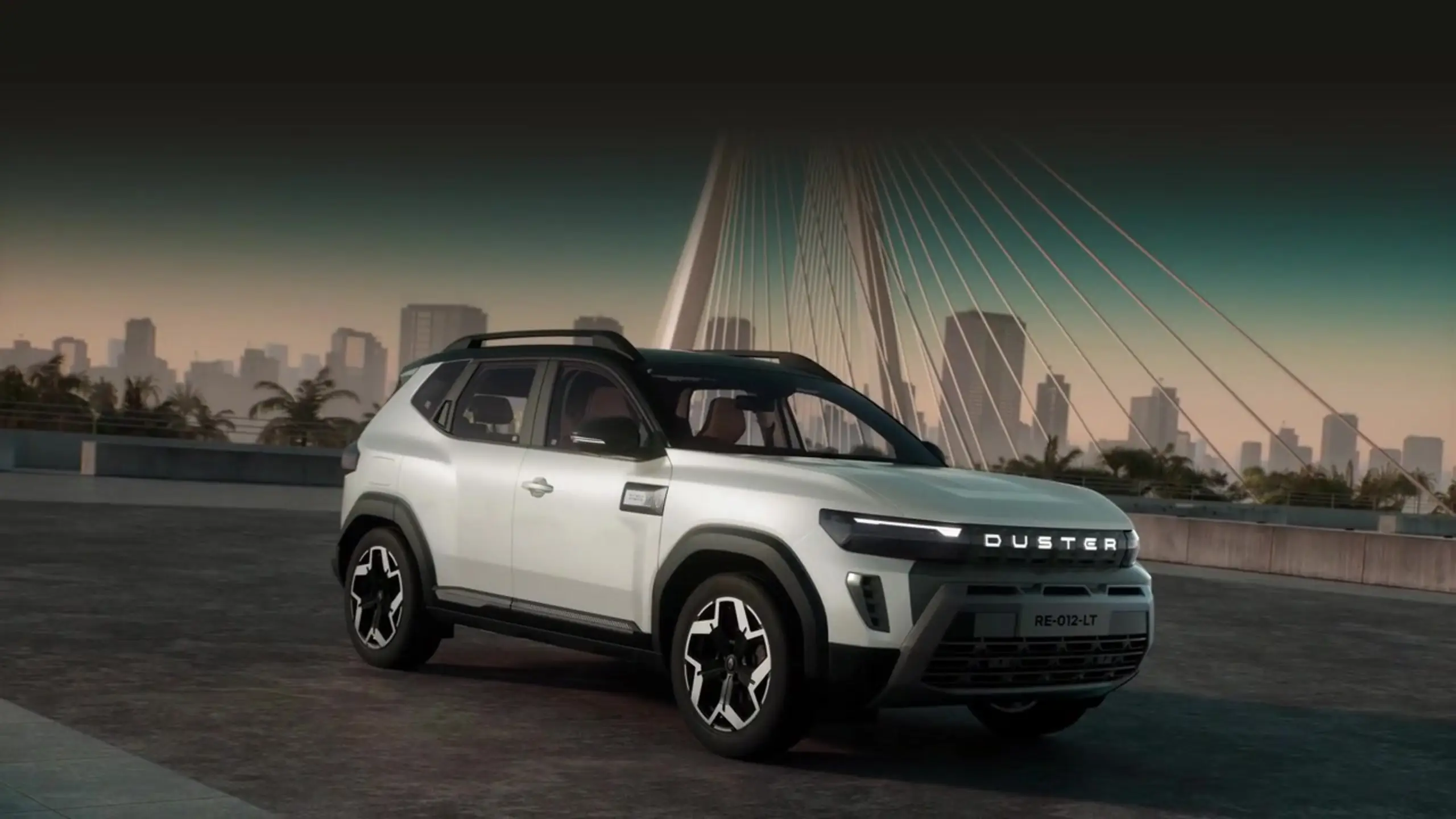
The Duster is the only strong-hybrid SUV in this segment that does not use the Toyota hybrid system. The other three share one 1.5-litre powertrain.
| Spec | Renault Duster Hybrid | Maruti Victoris Hybrid | Maruti Grand Vitara Hybrid | Toyota Hyryder Hybrid |
|---|---|---|---|---|
| Engine | 1.8L, 4-cylinder | 1.5L, 3-cylinder | 1.5L, 3-cylinder | 1.5L, 3-cylinder |
| Combined power | 160hp | 116hp | 116hp | 116hp |
| Battery | 1.4 kWh, 247V | 0.60 kWh, 177.6V | 0.60 kWh, 177.6V | 0.60 kWh, 177.6V |
| Gearbox | Multi-mode dog-clutch (4 engine + 2 motor gears) | e-CVT | e-CVT | e-CVT |
| ARAI mileage | 29 km/l | 28.65 km/l | 27.97 km/l | 27.97 km/l |
| 0-100 km/h (claimed) | 9.6 sec | Not published | Not published | Not published |
| Price, ex-showroom | Rs 16.99 to 19.49 lakh | Rs 16.43 to 19.99 lakh | Rs 16.68 to 19.62 lakh | Rs 17.18 to 19.99 lakh |
The Duster’s prices are introductory and apply to deliveries until 31 December 2026.
What is actually different
- Power with mileage. The Duster makes 44hp more and still claims better mileage. Renault calls its 0-100 km/h time of 9.6 seconds the quickest in the segment.
- How it feels to drive. An e-CVT has no fixed gears, so under hard acceleration the engine revs climb and hold, the familiar “rubber band” drone. The Duster shifts through real gears. Autocar India’s review found it feels closer to a dual-clutch: no drone, but a brief hesitation and noticeable upshifts around 50 to 60 km/h and near 120 km/h.
- Four cylinders vs three. The 4-cylinder engine is smoother at idle and under load than the 3-cylinder in the rivals.
- Range. With a 50-litre tank, Renault claims over 1,400 km on a full tank.
- Warranty. 7 years on the car and 8 years on the battery pack.
Duster Hybrid real-world mileage
Expect well under 29 km/l in daily use. No full road test figure is out yet, but early reviews give a rough idea.
During Autocar India’s review drive, the trip computer showed 16.9 km/l in city traffic. During hard performance testing it dropped to 11 to 12 km/l, which the reviewer said was not typical use. Treat both as early readings, not a tested average.
The gap between ARAI and real roads is normal. For reference, the petrol Duster 1.3 turbo DCT is ARAI-rated at 18.45 km/l, and Autocar India’s tested figure for it is around 10 km/l. Against that, even 16 to 17 km/l from a 160hp hybrid SUV is a big step up.
A few habits will get you closer to the claimed figure:
- Drive smoothly below 40 to 60 km/h so the car stays in EV mode longer.
- Lift off early before signals and speed breakers to let regeneration charge the battery.
- Use E-Save only when you need to hold battery charge, for example before long parking. It makes the engine run more often and raises fuel use.
- Keep tyre pressures at the recommended level. There is no spare tyre as standard, so a puncture kit is all you get unless you buy the space-saver accessory.
Should you buy the Duster Hybrid?
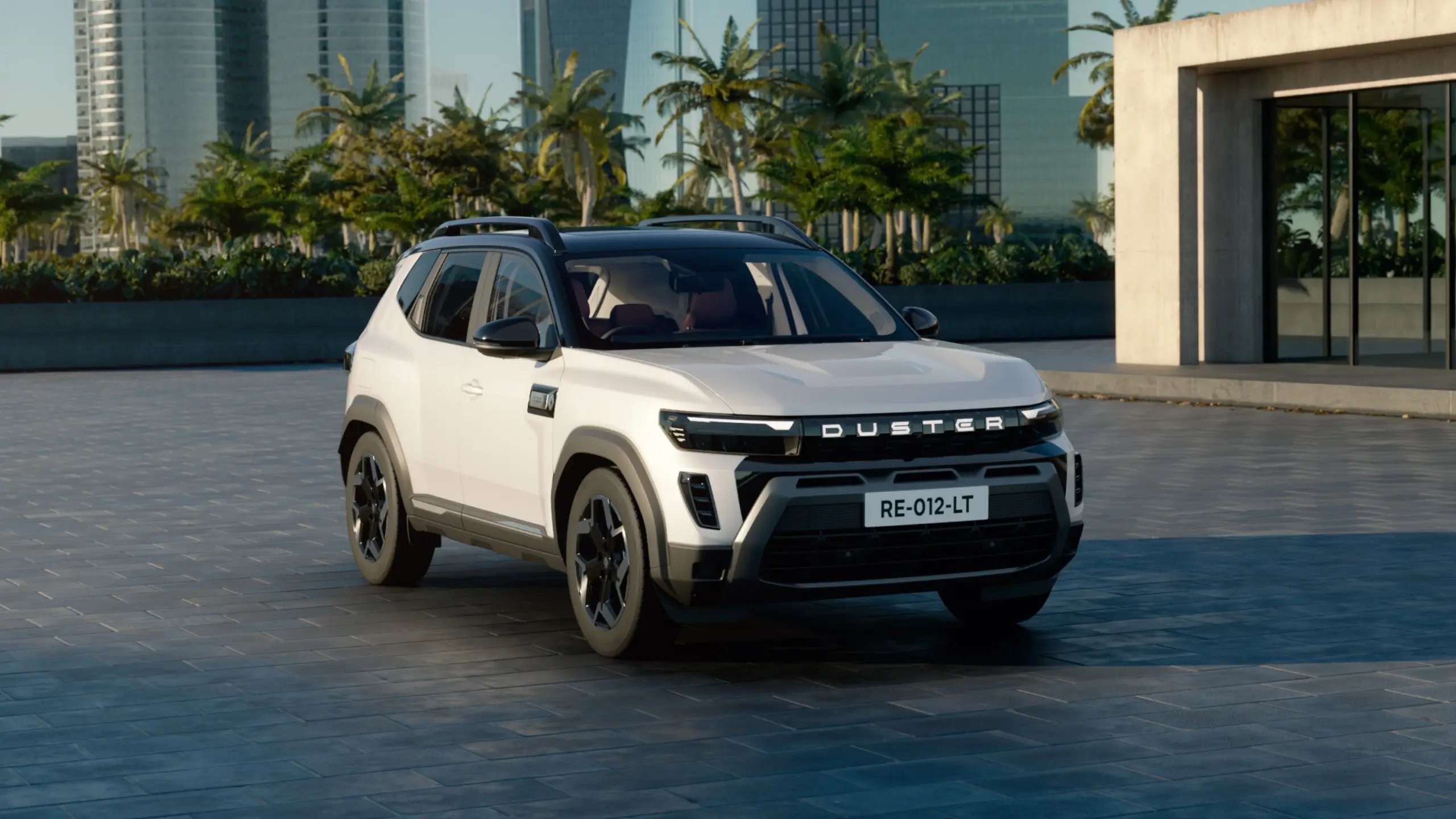
It makes the most sense if you drive a lot in city traffic, cover high monthly distances, or are moving out of a diesel SUV and still want strong performance with low running costs.
Think twice if any of these matter to you:
- Boot space falls from 518 litres in the petrol Duster to 372 litres, because the battery sits under the floor.
- The hybrid misses ADAS, the 360-degree camera and the auto-dimming mirror that the petrol versions get.
- No spare tyre as standard.
- The instrument cluster has no rev counter, and some controls (the volume stalk, the ventilated-seat buttons) are awkward to reach.
- The brief hesitation during gearshifts may bother drivers used to the smooth pull of an e-CVT.
If boot space and features matter more than mileage, the Grand Vitara or Hyryder hybrid are worth a test drive. If you want the best mix of power and efficiency in a hybrid SUV under Rs 20 lakh, the Duster is the one to beat right now.
Duster Hybrid FAQs
What is the mileage of the Renault Duster Hybrid?
The ARAI-certified mileage is 29 km/l. Early review drives showed about 16.9 km/l in city traffic on the trip computer.
How does the Duster Hybrid get 29 km/l?
It combines a 1.4 kWh battery, a 1.8-litre Atkinson-cycle engine, regenerative braking and a multi-mode gearbox. The car starts every drive on electric power, and Renault claims up to 80% of city driving can be electric.
Does the Duster Hybrid need to be charged?
No. The battery is charged by the petrol engine and by regenerative braking. There is no charging port.
Is the Duster Hybrid better than the Grand Vitara Hybrid?
On paper it has more power (160hp vs 116hp), a bigger battery (1.4 kWh vs 0.60 kWh) and higher claimed mileage (29 vs 27.97 km/l). The Grand Vitara uses an e-CVT and a 3-cylinder engine.
What is the Duster Hybrid price in India?
Rs 16.99 lakh (Evolution) to Rs 19.49 lakh (Emotion), ex-showroom. These are introductory prices for deliveries until 31 December 2026.
What warranty does the Duster Hybrid battery get?
The battery pack has an 8-year warranty. The car has a 7-year warranty.
What is the boot space of the Duster Hybrid?
372 litres, compared with 518 litres in the petrol Duster.
Sources
- CarWale: Renault Duster Strong Hybrid launched at Rs 16.99 lakh
- Autocar India: Duster Hybrid mileage compared with strong-hybrid rivals
- Autocar India: Duster Hybrid vs midsize cars spec comparison
- Autocar India: Renault Duster Hybrid review
- CarHP: Renault Duster E-Tech 160 hybrid explained
- Renault India: Duster Strong Hybrid E-Tech 160